

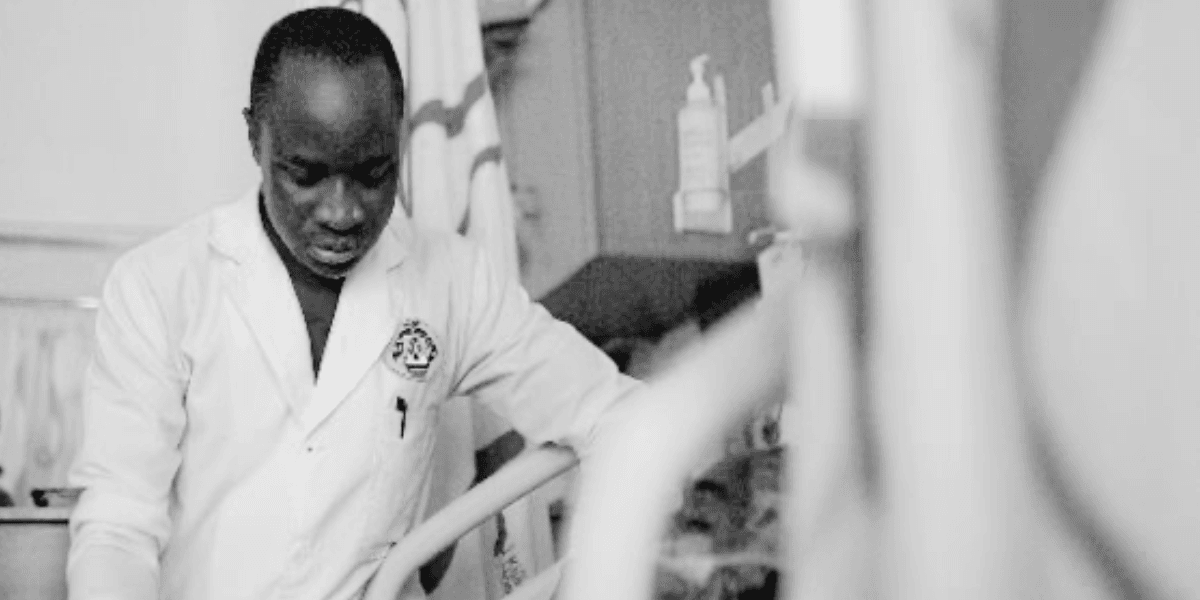
The following devotional was originally shared during one of our recent Monthly PAACS Prayer Calls. Each month, the PAACS family gathers virtually to seek God’s guidance, encouragement, and strength for the work He has called us to do. We pray that this reflection continues to inspire you to join us in prayer for our residents, faculty, and graduates serving across Africa.
Mark 14: 3 – 9
And while He was in Bethany at the home of Simon the leper, and reclining at the table, there came a woman with an alabaster vial of costly perfume of pure nard; and she broke the vial and poured it over His head. But some were indignantly remarking to one another, “For what purpose has this perfume been wasted? For this perfume might have been sold for over three hundred denarii, and the money given to the poor.” And they were scolding her.
But Jesus said, “Let her alone; why do you bother her? She has done a good deed to me. For the poor you always have with you, and whenever you wish, you can do them good; but you do not always have Me. She has done what she could; she has anointed My body beforehand for the burial. And truly I say to you, wherever the gospel is preached in the whole world, that also which this woman has done shall be spoken of in memory of her.”
And now let’s read some selected verses from 2 Chronicles 20.
1 Now it came about after this that the sons of Moab and the sons of Ammon, together with some of the Meunites, came to make war against Jehoshaphat.
3 And Jehoshaphat was afraid and turned his attention to seek the LORD; and proclaimed a fast throughout all Judah.
6…and he said, “O LORD, the God of our fathers, art Thou not God in the heavens? And art Thou not ruler over all the kingdoms of the nations? Power and might are in Thy hand so that no one can stand against Thee.”
12 “O our God, wilt Thou not judge them? For we are powerless before this great multitude who are coming against us, nor do we know what to do, but our eyes are on Thee.” 13 And all Judah was standing before the LORD, with their infants, their wives, and their children.
15 …and he [the prophet] said, ‘Listen, all Judah and the inhabitants of Jerusalem, and King Jehoshaphat: thus says the LORD to you, ‘Do not fear or be dismayed because of this great multitude, for the battle is not yours but God’s’”.
21 And when he [Jehoshaphat] had consulted with the people, he appointed those who sang to the LORD and those who praised Him in holy attire, as they went out before the army and said, “Give thanks to the LORD, for His lovingkindness is everlasting.” 22 And when they began singing and praising, the LORD set ambushes against the sons of Ammon, Moab, and Mount Seir, who had come against Judah; so they were routed.
At first glance, these two passages might seem quite unrelated. But they are not. Jehoshaphat was terrified. But what did he do? He sought the LORD. To fight the battle, he sent the marching band and the choir into battle first, ahead of the army. What military commander had ever done that before? And the enemy was routed. It was a complete victory.
Think of the spiritual atmosphere in the house of Simon the Leper that day. It was likely filled with tension and demonic oppression. The disciples were terrified and tense. We read in Mark 10:32 that as Jesus headed to Jerusalem for the last time He was walking on ahead of them. They lagged behind in amazement and fear, especially as He then told them that He was going there to be tortured and killed. The disciples were in discord, fighting with each other about who would be Jesus’ most important cabinet members. Judas, an unrepentant thief, was getting impatient with this fellow Jesus who didn’t seem ready to make any important political moves. He sneered at Mary as she poured the vial of perfume over Jesus.
What did Mary do? She didn’t make a speech. She didn’t even sing. She simply poured the perfume over Jesus. She worshipped and praised Him. Jesus praised her by saying, ‘She has done what she could.’ Like Jehoshaphat, Mary ended up doing the most effective thing possible in the face of tremendous spiritual opposition. She worshipped.
How often, when I am facing troubles and trials, do I respond in worship and praise? I usually complain and feel sorry for myself. I also try to figure out how to work out the problem. I scheme. Jehoshaphat didn’t. He simply sent in the choir.
I am talking to myself here when I say that we all need to recover Jehoshaphat’s and Mary’s understanding of worship and praise as effective spiritual warfare. It is the most important thing we can do. Yes, we can plan and try to work out solutions. God wants us to do that also. But praise and worship should be at the top. Jesus said of Mary, “She has done what she could.” Have we?
Debbie Eisenhut, MD
Previous PAACS Faculty
Mbingo Baptist Hospital


